Calm The Chaos Mini Series
Hi, it’s Charley here, yoga therapist and long-time yogi & meditator of 30+ years in Fremantle, Western Australia. I’m the Founder of Charleyoga, specialising in gentle therapeutic yoga for people with not-so-new bodies who might also have pain, old injuries or health conditions.
My happy place is helping everyday folks find movement, calm and confidence through yoga and meditation. But what holds many people back is TIME. So, I created this 7 day series of 60-second practices. You can begin to feel the benefits of befriending your body, mind & breath before you even come to class. Easy peasy. Enjoy!
Before you begin, download your weekly checklist to support your daily practice.
Today’s the day to begin! It’s time to go from chaos to calm in 60 seconds a day.
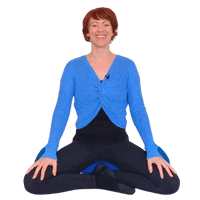
Today I want to introduce you to Up-Down Breathing. In this exercise I’ll guide you to become the observer of your breath, rather than the improver!
What you need
Tips for When to Practice
• sitting on the lounge or at your desk
• waiting for your tea to brew
• travelling on the train
The BIG Benefit
Why is this important? Because our fears and worries are fuelled by overthinking, either fretting over what has happened in the past, or worrying about what might happen in the future.
When you use the Up Down Breathing technique, you bring your awareness to the present. And in doing so, you are gently observing the flow of breath, helping you to break the cycle of worrying and overthinking.
And…
The beauty of this 60 second practice is that it’s always available to you.
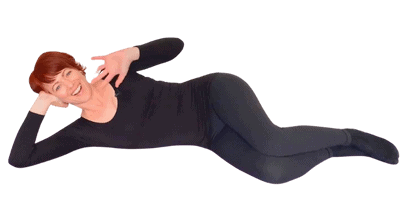
Can’t be bothered to move today? This is my favourite for days like this!
Drum roll please…
And what’s even better is that it can also help with back stiffness, making it a great go-to movement for your daily life.
What you need
Tips for When to Practice
…first thing in the morning
…between weeding sessions in the garden
…after a long day at work
The BIG Benefit
Why is this important? We spend most of our days in our mind and very little time checking in with how our body feels. Then we get to the end of our day and feel extremely fatigued or sore, with ongoing back stiffness and discomfort.
The Gentle Twist slowly & safely twists the spine in alignment with the flow of your breath relieving stiffness in the body, especially the back. With the support of the floor beneath you, there is very little risk of injury or aggravating pain.
You don’t need to go far but, if it feels ok to, you can gradually expand it out a little further to the sides.
So…
You are in control!
This practice only takes 60 seconds and it is always available to you.
Take back a little more control with your Day 2 practice,
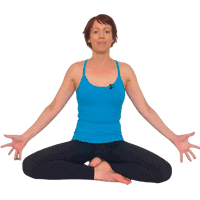
If you’ve ever felt stressed and someone has suggested that you “Just breathe and relax”. Here’s why this doesn’t work (and is annoying!)
This can, in fact, have the opposite effect! If this has happened to you, you are not weird or alone in this experience. Although this advice is well intentioned, it’s important to find the right breathing technique that works for you. It might be this one, or it might not, it’s ok to reject some practices and embrace others. It’s all a self-empowered learning experience.
Day 3 is all about combining a small movement with the breath.
Say hello to Starfish Breathing. This is a game-changer for those who find who may find that breathing practices alone and being completely still increases anxiety.
The best part about this practice is in its simplicity.
Practice sitting, standing or in any position really!
What you need
Tips for When to Practice
…before/after a meeting
…before/after an uncomfortable situation
…or even after a stressful day
The BIG Benefit
Why is this important? When you combine a small movement with the breath, it can be a game-changer for anxiety sufferers. You gently observe the flow of breath along with the movement of your hands, helping you to break the cycle of anxious and fearful thoughts.
And…
Just like Day 1 & 2, in just 60 seconds, you can begin to take back a little more control!
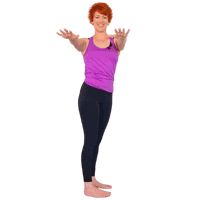
Wahooo! You made it to Day 4!
If you have managed to explore the other 3 practices, then you may have begun to notice subtle changes but don’t worry if you haven’t yet, this is just the beginning.
Today I want to introduce you to Spine Salute.
What you need
Tips for When to Practice
…waiting for the kettle to boil
…at work in your office
…on the beach or at the park
…as a warmup before vigorous activities.
The BIG Benefit
Why is this important? The spine loves to be moved and, if the movements are gentle, they are even more effective in releasing tension during your day. This Spine Salute gently improves flexibility by forward and backward bending (flexion/extension), twisting and side bending (lateral) in each direction.
So what’s not to love about it? See for yourself!
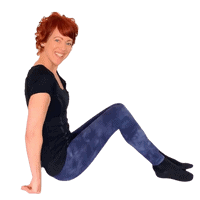
Say hello to Diaphragmatic Breathing Reclined.
What you need
Tips for When to Practice
…when you get home from a big day
…in the evening before bed
…anytime in your day when you can lie down
The BIG Benefit
Day 5 is all about gently strengthening your diaphragm and developing the ability to breathe more deeply.
Why is this important? By lying back on a low folded blanket, and breathing in this way, it allows for the body to create more 3-dimensional movement of the ribcage. This helps to deepen the breath, slow it down and calm the nervous system.
When we calm our nervous system it switches from…
Fight & Flight
(Sympathetic Nervous System)
↓↓↓↓↓↓↓↓↓↓↓↓↓↓↓↓↓↓
TO
Rest & Digest
(Parasympathetic Nervous System)
So your nervous system relaxes and your body can begin to digest food with much more ease.
This is also a great position to lie in and listen to a guided meditation, add another blanket over you to stay warm and comfortable. Take a little time out for yourself and take your attention inward. 🧘
You won’t regret it, I promise!
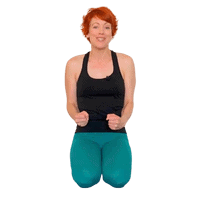
If you have been feeling quite tense lately, you are going to find my Day 6 practice really useful!
Sometimes it’s tricky to know if muscles are still partially tensed or completely relaxed, especially when it’s an area of habitual tension held in the body. For me, it’s the shoulders! Perhaps you can relate or have a different area where you hold on to tension.
What you need
Tips for When to Practice
…before meditation
…even if you wake up in the night
The BIG Benefit
Why is this important? Progressive muscle relaxation has been shown to reduce salivary cortisol levels so it may help move you towards a more relaxed state.
“Results indicated that a brief relaxation exercise led to experimental subjects having significantly lower levels of post-intervention heart rate, state anxiety, perceived stress, and salivary cortisol than control subjects, as well as increased levels of self-report levels of relaxation.”
(Pawlow & Jones 2005)
Not all techniques suit everyone and that’s ok!
If you don’t particularly like this one, there are others you can try. You could revisit Day 1 with Up-Down Breathing or yesterday’s Diaphragmatic Breathing Reclined.
Today’s practice is a great precursor to meditation or a standalone practice, give it a go and let me know how you like it.
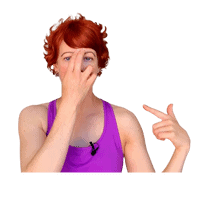
I really have left my favourite to last!
What you need
Tips for When to Practice
…when you need to quickly refocus and switch tasks
…before an important meeting, job interview, exam
The BIG Benefit
Why is this important? By clearing your mind you are able to focus more easily on the task at hand and be more present. This helps to improve how you respond and perform in your day to day.
Alternate Nostril Breathing has also been shown in studies to help insomnia sufferers. Great news if sleep is something that you struggle with. You’re not alone by the way, it’s what brought me to yoga over 30 years ago and I haven’t looked back.
Please Read - Safety Tips For Viewers
Guided meditation can be a great tool to help alleviate stress & anxiety. However, meditation is not a substitute for professional healthcare. If you feel you are not coping, then please seek professional help by speaking to your GP. Mental Health Australia provides further information and resources that you might find helpful https://mhaustralia.org/need-help